
Behind every pharmaceutical delivery lies a patient waiting for life-saving medication. With lives literally on the line, the pharmaceutical industry operates under intense pressure to maintain the integrity of its supply chain.
Unfortunately, due to sensitive pharmaceutical products, the industry faces a lot of challenges; the products need to be transported in temperature-controlled containers so that the quality is not compromised. Security is also a huge factor to consider since these products are popular in the black market.
This is where fleet management solutions come in; these systems can ensure that every delivery reaches its destination safely and on time.
We will now unpack ways fleet management can be used to transport pharmaceutical products and discover how Cartrack solutions support the cold chain industry.
The pharmaceutical market in Singapore is a major global and regional hub for the biomedical sciences sector, and it continues to grow rapidly. The market size is estimated to be approximately US$2.94 billion in 2025 and is projected to continue its strong upward trajectory. This proves its critical role in the nation's health sector and its status as a key economic pillar, manufacturing nearly S$38 billion worth of products for global markets in 2025.
This is why efficient and reliable fleet management is important. It’s more than just getting from point A to point B; it’s about making sure that life-saving medications and vaccines arrive safely, securely, and on time.
Fleet management systems help pharmaceutical companies oversee every aspect of their vehicle operations. This includes making sure that vehicles are properly maintained to avoid breakdowns, that drivers are well trained and monitored, and that routes are optimised for speed and safety. By paying attention to these details, companies will not only reduce risks like theft and temperature control issues but will also ensure that they’re meeting strict industry regulations.
Ultimately, effective fleet management allows pharmaceutical companies to focus on their core mission, which is to provide quality healthcare products while knowing their deliveries are in good hands.

The industry is quite niche; it requires proper handling and transportation; otherwise, if not handled with care, the efficacy of the products will be compromised. To avoid this, the industry will need to adopt fleet management solutions. Let’s explore the key components of pharmaceutical fleet systems:
Shipping regulations are among the most important things to consider when distributing pharmaceuticals. These regulations are set in place to protect the integrity and quality assurance of the medicine and vaccinations.
Pharmaceutical distributors in Singapore must hold an Importer's Licence (TPIL) and/or Wholesaler's Licence (TPWL) from the Health Sciences Authority (HSA). Compliance with Good Distribution Practice (GDP) standards is mandatory to ensure the quality and safety of all therapeutic products.
The Singapore's Requirements for Pharmaceutical Transport (Based on HSA GDP). These include:
A fleet management system can help track all transportation activities, generating detailed delivery times, routes, temperatures, and driver performance. This data provides documentation that can be used for audits and demonstrates compliance with industry regulations.
To preserve their effectiveness, many medications must be transported within specific temperature ranges, often requiring cool or cold conditions.
Fleet management software has temperature sensors to ensure that vehicles maintain the desired temperature throughout the journey, ensuring product integrity and compliance with regulatory requirements.
Medication is expensive, so it is no surprise that pharmaceutical shipments are susceptible to crime.
Since there is high-level security at warehouses where the pharmaceuticals are stored, criminals are most likely to attack during transit.
A fleet management solution will ensure that fleet managers are aware of the container's location through continuous real-time GPS tracking. Drivers will only use planned and optimised routes to ensure the safest and quickest routes, with no unnecessary delays on the way. Tools and features such as cameras and geofencing add an extra layer of security.

Cartrack’s fleet management solutions help businesses in various industries to meet their bottom line. The pharmaceutical industry is no different. Let’s explore ways our solutions can ensure safe transportation of medication and vaccines, helping patients get the treatment they need:
In closing, the pharmaceutical industry experiences many challenges when transporting life-saving medication and vaccines, especially regarding temperature control, security, safety, and compliance with regulations. Pharmaceutical companies are not just regular businesses where a mistake can easily be overlooked; one mistake in the distribution of these pharma products can unfortunately claim a life. Telematics systems ensure that operations run smoothly, and that medication and vaccines are delivered safely with their quality and integrity still intact.
Contact us today to enquire about how we can help your business reach its full potential.
Q: Is it possible to have different temperature zones within the same cargo area, and can Cartrack monitor those zones independently?
A: Yes, it’s possible. Depending on your needs, we can set up different temperature zones inside your vehicles. We can install up to four sensors in a vehicle that report separately so that you can keep each type of medication at the right temperature, even in the same shipment.
Q: Is it possible to track multiple pharmaceutical shipments simultaneously?
A: Yes, on our web interface or mobile app, you are able to manage and track multiple deliveries all at once.
Q: Are fleet management systems scalable for pharmaceutical companies of all sizes?
A: Companies of all sizes can benefit from fleet solutions. Whether a company has a few vehicles or a large fleet, the system can be customised to match the operational scale and complexity, offering flexibility and cost-effectiveness.
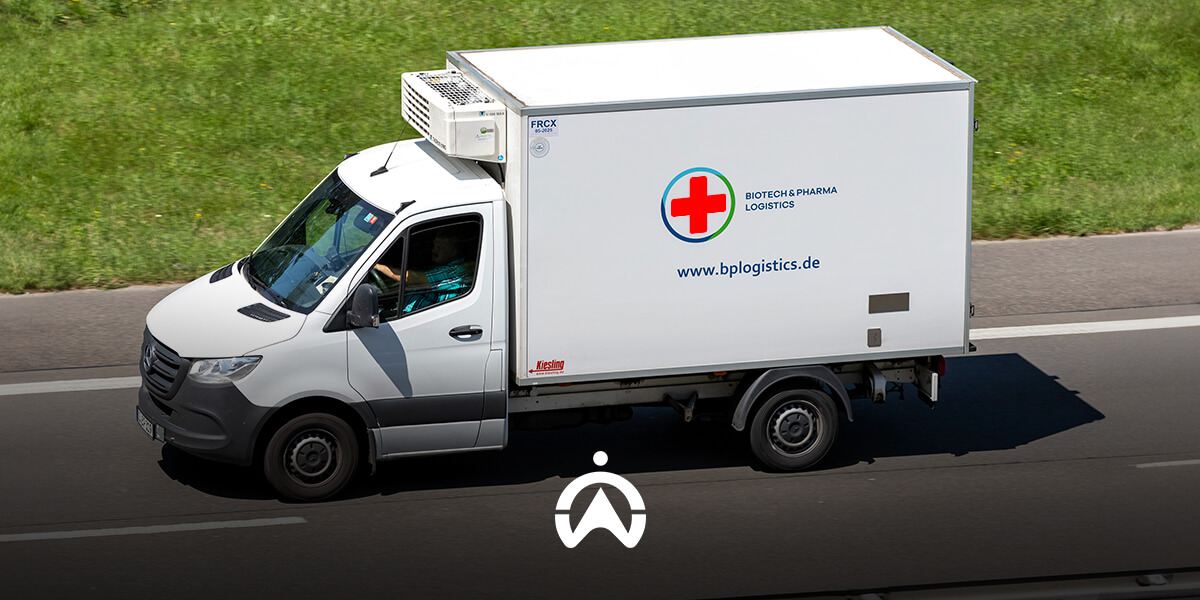
Explore how the use of fleet management solutions positively contributes to the pharmaceutical industry by ensuring safety and security.
