
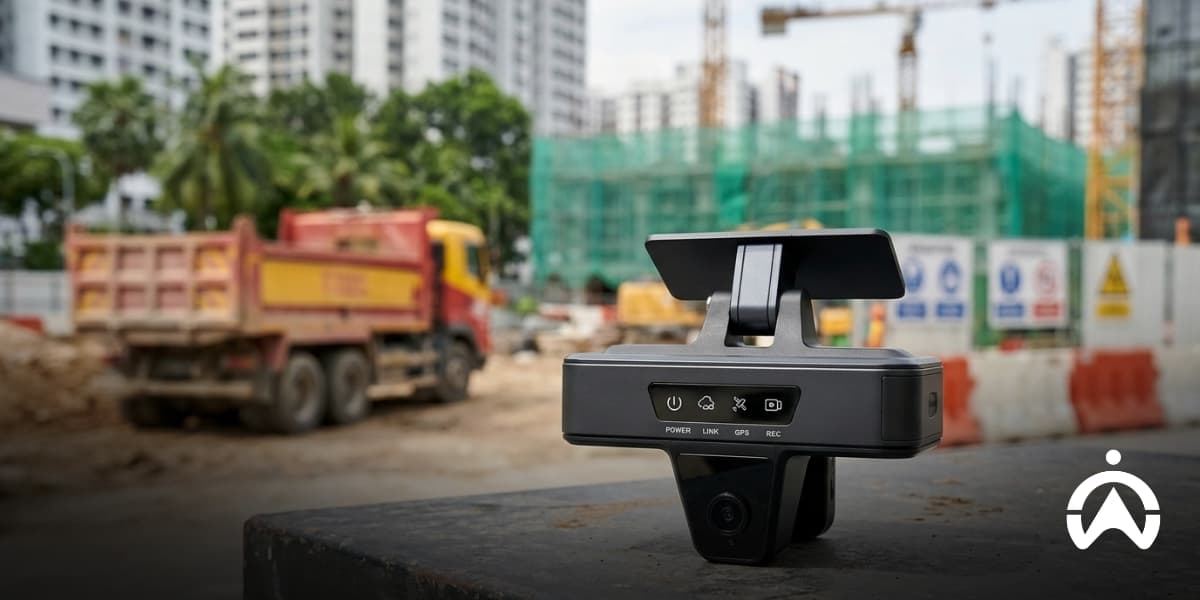
The best construction dashcam setups in Singapore combine 360-degree multi-camera coverage with AI pedestrian detection and cloud-linked telematics like the ones from Cartrack.
They give fleet managers complete visibility around blind spots, real-time driver coaching, and instant video retrieval from the cloud, ensuring your operations meet the Ministry of Manpower (MOM) safety standards and Workplace Safety and Health (WSH) compliance.
In Singapore workplace safety standards are incredibly strict, and if an operation isn’t meeting these standards, not only can they incur exceptionally high fines but also stop-work orders. This is why it’s especially important for businesses who operate in dangerous conditions with vehicles that have limited visibility to have the best dashcams and vehicle cameras installed in their fleet.
As a construction fleet owner, you need to ensure that your entire operation is running safely. Construction sites are notoriously hazardous. Long working hours and busy schedules increase driver fatigue, and high noise levels make it difficult for workers and drivers to hear what's happening around them. These factors increase the risk of accidents.
This is where dashcams and AI-powered cameras come in. But remember, construction trucks require cameras that work for their requirements and conditions. A simple camera solution won’t work for this environment.
Here’s exactly what you should look for to get the best construction truck camera and dashcam. 👇
Full-coverage cameras are a necessary safety accessory for construction fleets in Singapore. Having a single camera that doesn’t show you any of your blind spots will be a waste. Construction trucks need cameras which are designed to give the driver visibility of every blind spot surrounding the vehicle.
Construction fleets work in harsh environments, and any camera solution you choose should be able to handle these conditions with ease. They need to withstand the heavy vibrations of construction vehicles and the constant dirt, dust, and mud that's common on construction sites. A consumer-grade unit won’t survive on a construction site.
LTA often requires oversized and permit-restricted vehicles to travel on public roads outside of peak traffic hours or at night. So while on paper it seems as if your construction fleet is only working during the day, realistically a lot of movement will be done in poor lighting conditions. So make sure the cameras you choose have low-light and night vision capabilities.
The footage is your evidence of compliance and innocence in an accident. You need to get a camera system that securely stores footage and also has continuous recording with automatic impact-triggered locking so no one can tamper with the footage.
The one thing that actually makes camera hardware useful is when it’s paired with GPS, speed and route data. This way, when an incident happens, or when an insurer or Workplace Safety & Health (WSH) investigator comes to find out what happened, you have more than just a video.
On top of that, it’s also exactly the type of integrated safety management the Ministry of Manpower (MOM) stated it wanted more of.
When choosing your camera system, keep in mind how quickly and easily you should be able to access the footage. MOM’s reporting window for serious workplace incidents operates within hours for fatalities and within days for other reportable events. NOT weeks.
Check how quickly you’re actually able to pull footage from your cameras. Oftentimes fleet managers will find that a system works perfectly in a demo, but it takes 2 days to pull footage.
If the camera system takes days and makes you jump through hoops to access footage, it won’t be of use to you. So prioritise a camera system that provides you with fast, reliable cloud footage retrieval.
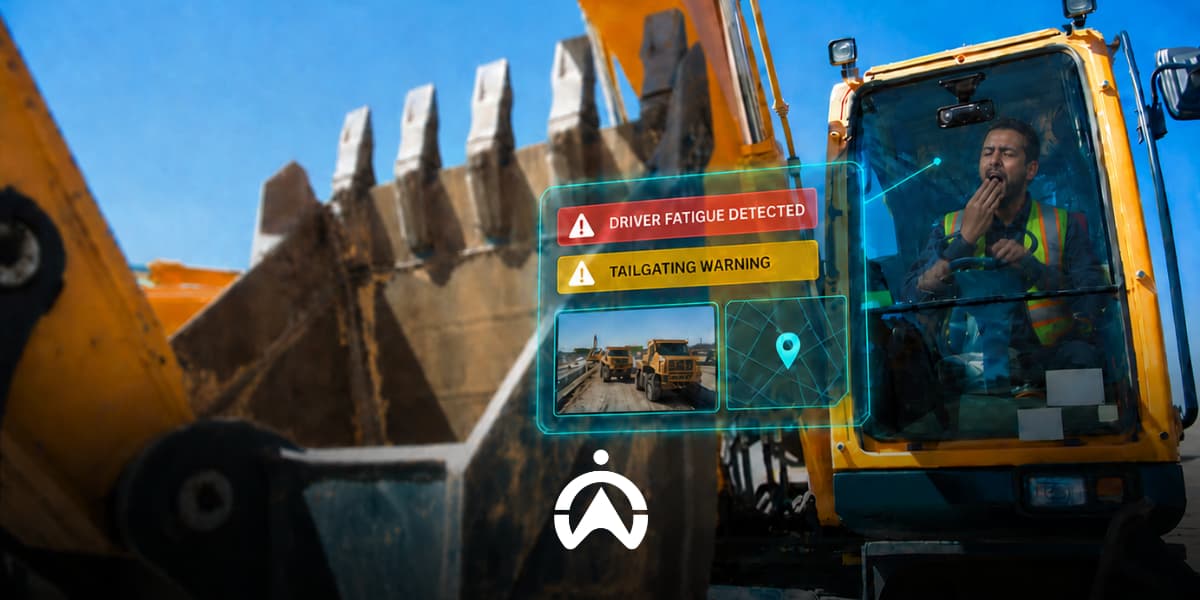
Worker and obstacle detection is a category defined by the WSH Council named in its 2026 advisory. This is why the camera system you choose must have AI-based proximity and pedestrian detection as well as fatigue monitoring. These features take a camera system from a passive recording tool to a proactive accident prevention tool.
To qualify for certain government tenders, your fleet must obtain an ISO 39001 safety certification. AI cameras in your fleet can help you to qualify for the certification.
There were 36 workplace deaths in 2025, and 42% of these deaths were caused by vehicular incidents. Even though Singapore’s workplaces rank amongst the safest in the world, and according to MOM’s WSH National Statistics Report for 2025, there was an all-time low of 0.96 fatal injuries per 100,000 workers.
Recent data shows the leading cause of workplace death in Singapore is vehicular incidents. In the first half of 2026, there were a total of 44 fatal and major workplace injuries; 38 of those were vehicle-related incidents.
Unfortunately, the construction and manufacturing sectors are still the industries responsible for the most major workplace injuries and deaths.
From the data recorded in 2025, vehicle-related incidents, falls from heights and the collapse or failure of structures and equipment accounted for 78% of every workplace deaths in Singapore.
If you have a fleet with various types of trucks constantly moving around active construction sites, you’re at the centre of this risk profile.
This is what construction fleet managers need to pay attention to. MOM explicitly stated that it’ll keep working with industry partners to strengthen vehicular safety practices, and one of the ways it plans to do this is by improving fleet safety management.
Construction trucks aren’t just a bigger type of company car; they're hazards because they have more blind spots. In a normal vehicle, if someone is standing next to your car or behind it, by simply looking in your mirrors, you’ll see them. But for a truck, if you're standing in front of it, the driver might not see you.
A dashcam for a sales rep travelling to a client will simply need to show who skipped the red light. A construction truck, however, needs to show if the zone was clear, if the horn was used and if there was a banksman.
Global stats have shown that roughly 17% of pedestrian deaths are caused by HGVs. Blind-spot detection systems are shown to cut pedestrian-related accidents by up to 24%.
The part fleet managers often forget when shopping for cameras for their construction trucks in Singapore, WSH isn’t going to simply ask who was at fault when an accident happens. They want to know if the employer, the owner of the site, and the main contractor each did everything reasonably practicable to prevent this from happening.
The duty of workplace safety sits with multiple parties, and not just the driver or their direct employer. This is what the Act treats as a shared chain of responsibility.
According to the WSH Act, a single offence can cost a company up to S$500,000 in fines. Individual directors and managers can receive fines of up to S$200,000 and up to 2 years in jail. Additionally, Section 60 of the Act lets prosecutors charge an individual officer as well as the company where their consent, involvement or neglect played a part.
There are seven risk controls recommended by Singapore’s WSH Council in a Vehicular Safety Advisory to safeguard banksmen and traffic controllers on worksites. The advisory was published on 12 June 2026 and came into effect after multiple deaths involving banksmen and traffic controllers. One of these deaths was caused by an excavator hitting a worker while carrying out banksmen duties within their work zone.
The advisory has explicitly named four key technologies to reduce workplace deaths. These are:
Regulations aren’t the only reason fleet managers should invest in high-quality video telematics. The other two important reasons are for insurance and employee protection. Having video footage of a workplace incident is incredibly valuable and useful to your operations.
Singapore's General Insurance Association (GIA) already treats in-vehicle cameras as objective witnesses in an accident dispute. This is because the footage shows the insurers exactly how and what happened instead of getting two conflicting stories, each trying to prove their innocence.
This is why finding cameras designed to give you 360 coverage that’s also integrated with telematics to prove speed and other driver behaviours is vital to keeping your operations protected.
The construction industry in Singapore is the largest employer of foreign work permit holders, having roughly 378,000 workers in the sector. And because the industry runs on a Man-Year Entitlement’s (MYE) quota system, losing a qualified driver will create an immediate operational bottleneck.
Now what does this mean for your construction operations?
Having indisputable video footage not only protects your drivers, but it also protects your project deadlines.
Once you’ve sourced the best camera solution for your fleet, the next step is to turn your camera footage into everyday safety practice. If your team isn’t actively utilising footage, having the cameras is pointless. Build it into routines your team already runs, rather than treating it as something that only gets dug out after something goes wrong.
So how do you do this?
By proactively using your footage, your camera system stops being an insurance afterthought that provides you with zero ROI. It becomes part of how your fleet proves, every single day, that it takes safety seriously. Not only on the day something goes wrong.
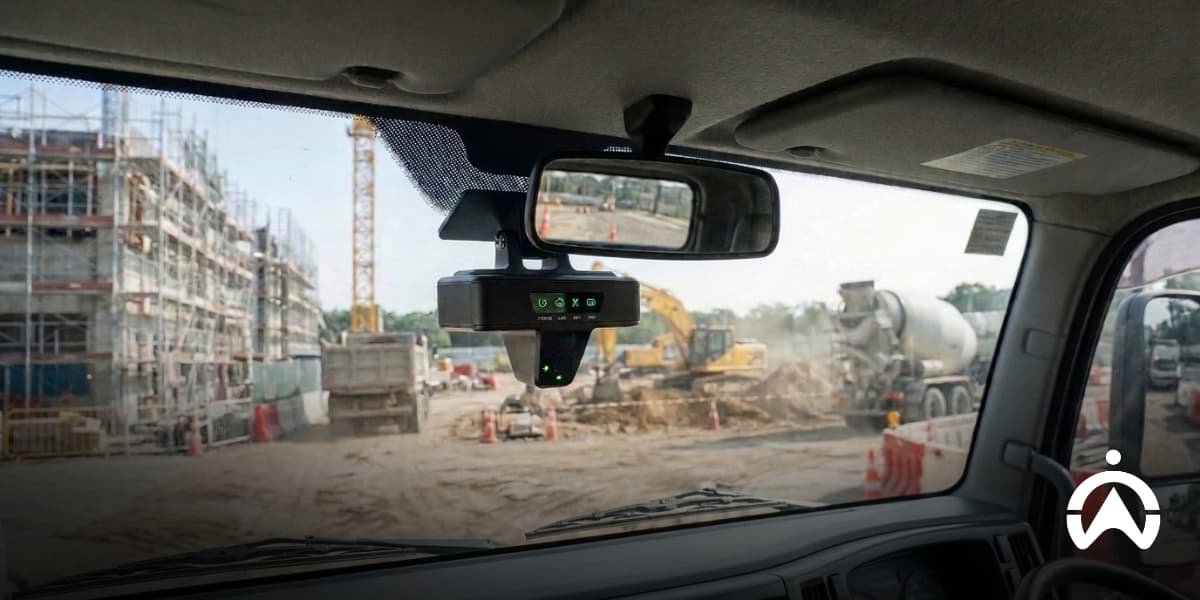
The best dashcam and camera system for a construction fleet must combine footage with live GPS and driver behaviour data in one single place. That’s the combination that gives you the strongest possible record on the day it matters. One with fast and secure cloud storage and a 24/7 support team.
This is exactly why Cartrack is the best construction fleet partner.
Go back to the dump truck reversing at 6 am on your work site, but this time because you have Cartrack’s AI-powered cameras installed, the outcome changes:
Eminent Star Readymix is a ready-mix concrete manufacturer, operating from three strategic plants: Sungei Kadut, Jurong Port, and Punggol. They also have a diverse fleet of mixers, tankers, tippers, trucks and utilities.
They implemented Cartrack’s comprehensive fleet management system with AI cameras to track and monitor driver safety.
This was the result:
So, if you're ready to get the best dashcam and camera system for your construction truck fleet, click here to speak to one of our highly trained reps today!
Most construction trucks, like tippers, flatbeds, mixers and dump trucks, need a minimum of front, rear and side cameras. A single dashcam unfortunately won’t help a truck driver see their blind spots, so having multiple cameras that provide a driver with as much coverage as possible is the best option.
The cost for dashcam and camera systems for construction trucks depends on a few things.
This is why it’s best to get a tailored quote rather than relying on a baseline price.
Yes, partially. WSH construction regulations do require heavy work-site vehicles to have safety devices like reversing alarms and rear-view cameras or mirrors if a risk assessment deems it necessary. Additionally, in June 2026, the WSH council recommended vehicle-mounted cameras as well. So while cameras are not a complete legal requirement as yet, it’s becoming a safety compliance standard.
Discover the best construction truck dashcams in Singapore. Check out the MOM WSH guidelines, prevent blind-spot accidents, and ensure AI video compliance
