
Many view autonomous vehicles (AVs), specifically self-driving ones, as something of the future. However, the Acting Minister for Transport, Jeffery Siow, announced at MOT’s Committee of Supply on 1 April 2026 that an autonomous shuttle service officially became available for members of the public in Punggol. This proves that AVs are here now and can change how fleets operate.
Driver shortages in Singapore are adding a layer of stress to various fleets across the country, which is leading fleet owners to look at other ways to continue their operations successfully. However, with this technology still being relatively new, is it something that can assist fleets?
In this blog, we’ll be explaining what autonomous vehicles are, what Singapore’s current stance on AVs is, and if AVs can truly assist fleet owners with the driver shortage problem. We’ll also highlight the importance of your existing fleet data for successfully adopting AVs and managing your fleet successfully.
Autonomous vehicles are vehicles powered by technology to accurately assess their surroundings. They can then either perform some or all of the driving tasks without any human intervention. The technology used includes sensors, high-definition maps, and artificial intelligence.
Autonomy works on a variety of factors, not just one. The tech used in AVs collaborates with each other to accurately detect its surroundings, predict what other road users will do, and control the steering, acceleration, and braking.
The Ministry of Transport’s consultation on AV legislation corresponds to the autonomy levels defined by SAE International, which range from 0 to 5. And because all policy operations in Singapore follow the SAE International classification, this information is essential to understand.
By four systems working in sequence, an AV is able to operate safely.
Because these two often get mixed up, it’s important to note the difference between ADAS and autonomy. Advanced driver assistance features support an actual human driver responsible for the vehicle, whereas an autonomous vehicle can completely remove human responsibility while it’s operating.
Singapore has embraced AVs on their roads. The LTA has gradually introduced three fixed-route autonomous shuttle services in Punggol, which not only enhances the first-mile-last-mile connectivity but also has the potential to reduce public transport travel times by up to 15 minutes.
Additionally, the safety record for this deployment has been effectively documented. For example, during testing, some of the shuttles had autonomously driven over 25,000 km, and during invite-only community rides that started in January 2026, around 740 people experienced them.
Since then, the public’s interest has grown, and it’s estimated that by July 2026, over 11,500 unique riders would’ve used the autonomous shuttle service.
Out of the 900 respondents to LTA’s July 2026 post-ride surveys, roughly 99% had reported feeling safe and would recommend the AV ride.
In Singapore the approval process for AVs is very strict. Each shuttle service has to pass a closed circuit test at the Centre of Excellence for Testing and Research of Autonomous Vehicles (CETRAN). They then conduct on-road testing without any passengers, but a safety operator must always:
Additionally, all AVs have to meet LTA’s AV assessment framework. This includes the autonomous shuttles being monitored in real time and having their performance data collected and analysed throughout both trail and commercial phases.
On top of that, plans for expansion are already in place, with the LTA aiming to introduce similar autonomous shuttles in other HDB towns like Tengah. With an $8.1 million contract secured to deploy driverless buses in Marina Bay and One North, authorities are planning for approximately 100-150 AVs to operate nationally by the end of 2026.
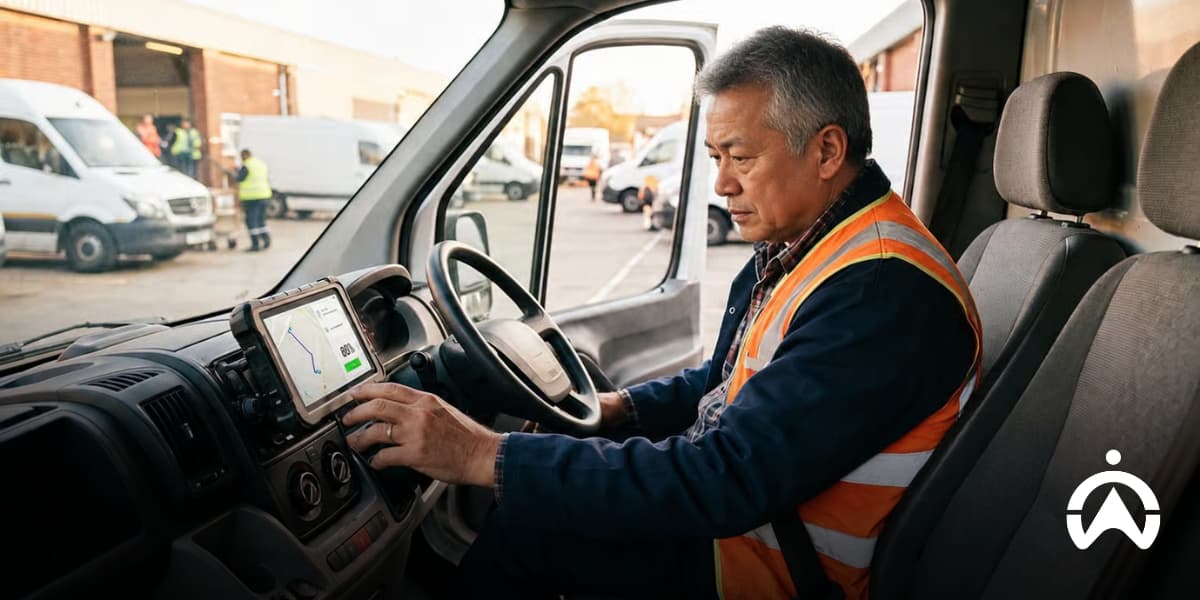
As of 2026 there are over 12,000 vacant logistics positions in Singapore. This is due to:
The impact of this shortage is seen in extended hiring timelines and increased wages for drivers. Warehouse roles and delivery drivers have also seen a higher turnover rate, and the cost impact per replacement is between S$3,000 and S$8,000.
What operations need to keep in mind is that if the supply of drivers is constantly limited, the return on each hour of driver time will also permanently increase. Getting more output from your existing drivers stops being an efficiency project and becomes a capacity strategy.
Unfortunately autonomous vehicles won’t currently solve the driver shortage problem and definitely not on their own. AVs also shift the labour rather than removing it. The proposed framework set out by MOT has identified four key stakeholders in the AV ecosystem; these are:
Three out of the four mentioned are people in your business that still need to be recruited, trained, scheduled, and then retrained. So while the job titles may change, the number of people needed doesn’t.
So while autonomous vehicles will reduce labour costs on fixed and enclosed routes, they won’t replace human drivers when it comes to mixed urban work, fleets with unpredictable schedules and customer-facing delivery operations.
What this shows is that driver shortage is a current problem that needs to be managed now with the tools that are available now. Autonomy is a partial solution, but it won’t rescue your fleet.
When AVs become a tangible asset for all fleets, there are quite a few advantages that they can offer you. These advantages include safety, utilisation, operations to continue at night, reduced amount of strain on current drivers, lower running costs, and proven reliability. Let’s take a deeper look at each of these.
Safety: Accidents by commercial vehicles are mainly due to fatigue and driver distraction. AVs won’t have this problem at all. Singapore's phased AV assessment framework exists because of the safety gains that have been proven.
Utilisation: The major benefit that comes with using AVs is that they're not bound by shift patterns or hours-of-service limits. Additionally, they can also run for longer hours, changing how many vehicles you’ll need for a specific amount of work.
Night operations: AVs will allow more cargo to travel at night, avoiding and easing daytime road congestion.
Less strain on remaining drivers: For your existing drivers, AVs can alleviate the strain caused by repetitive travel tasks, and your human workforce can focus on more complex and variable tasks.
Lower running costs: Because AVs aren’t controlled by human driving behaviours, they’ll drive a lot more smoothly and consistently, ultimately lowering your fuel and maintenance costs.
Proven in controlled environments: Fleets in Singapore don’t have to imagine what running an automated fleet will be like. At Tuas Port, electrified automated yard cranes and guided automated vehicles have efficiently transported containers between the yard and the wharf, all while under remote management from the Tuas Port Control Centre.
While there are many pros to using autonomous vehicles, there are also some major challenges that they face. Some of the challenges include the capital cost, payback, heavy dependency on infrastructure, mixed traffic, tropical weather challenges, network security risks, and liability obstacles.
Singapore’s proposed AV law provides fleet operators with strict compliance, liability and operational regulations. MOT opened a public consultation to develop legislation governing AVs that are operating on Singapore’s roads. The goal is to develop an AV Act in Parliament in 2027 that sets out safety regulations and liability, insurance, and enforcement frameworks.
The reasons for this are simple. Current traffic regulations, insurance practices, and enforcement systems are all built around human drivers.
This is how the proposed AV laws will affect fleet management and operations:
The legislation will expect fleets growing with AVs to move from onboard safety operators (SOs) to remote operators (ROs). Fleet operators are also expected to create a strong Concept of Operations (CONOPS) and provide specialised training for remote workers so they can safely assist when necessary.
Currently responsibility sits on the victims to prove negligence in the case of an accident. The new framework wants to increase public safety by introducing "statutory presumptions”. This means that if an AV is involved in an accident:
The LTA has imposed strict data management requirements because operational data is critical for liability defence and accident investigations. Fleets must continuously capture operational data from the vehicle’s telematics and store it locally. For cross-border fleets, data transfers must be tightly controlled and documented to minimise cybersecurity risks.
Fleet operators can face severe regulatory sanctions, fines, or imprisonment for:
Additionally, fleet operators must appoint a specified person to liaise with the LTA, who will personally bear the consequences of compliance breaches.
There’s no fleet that simply jumps to driverless autonomous vehicles overnight. Over the next few years fleets will be completely mixed, including human-driven vehicles, ICE vehicles, EVs, ADAS-equipped vehicles and eventually some AVs. The operators that’ll be successful in the AV adoption will be those who already have complete operational insights today.
Have all your vehicles already on one single platform regardless of their age, make or autonomous levels. Because if you have your AVs connected to the vendor’s dashboard and the rest of your fleet to another, you’ll create two separate fleets. And by doing this, you’ll have no clear understanding of costs per km, utilisation rates or risks.
You can't prove that an AV is safer than your current drivers if you don’t actually know how safely your current drivers are performing. To find out how your drivers are actually performing, use:
There are specific systems that autonomous vehicle operators are currently using that you can already implement in your current fleet. By implementing advanced telematics in your fleet, this data won’t be foreign to you, and you’ll know what to expect when you manage your AVs. This includes:
To manage your fleet successfully while AV tech is still developing, you need to ensure you’re running your fleet as if it has AVs already. What we mean by this is to invest in the technology now that can provide you with all the insights and tools you need to run a fully optimised fleet.
By doing this now, you’ll know exactly what part of your operations will benefit from AVs and how they’ll fit into your business objectives.
Everything that’s listed below will provide you with value now and build towards AV readiness later.
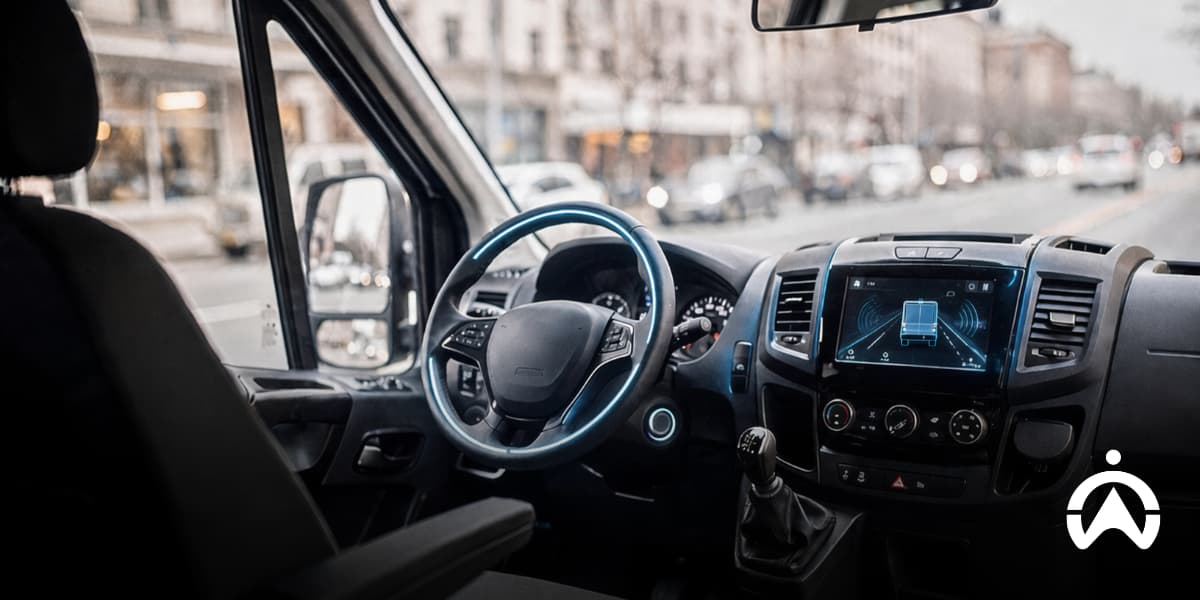
Cartrack’s fleet management system works with fleets across the globe and is designed to grow with your business. We can provide your fleet with all the technology and data it needs to be successful now and in the future when AVs are common fleet vehicles.
Tong Seng Produce Pte Ltd implemented Cartrack’s system, and this is what they experienced:
No, not completely. Autonomous vehicles won’t replace drivers, at least not yet. Currently their capabilities will allow them to take over fixed, repetitive and enclosed routes. They’ll also create a demand for safety operators, remote operators, controllers and technicians. So essentially there’ll be a redistribution of driver roles
The current driver shortage in Singapore will impact your fleet costs in the following ways:
If an autonomous vehicle crashes, the fault will depend on the vehicle’s level of autonomy and the root cause of the accident.
What Singapore fleets need to know about autonomous vehicles, the driver shortage and managing a mixed fleet successfully as AV law arrives in 2027.
